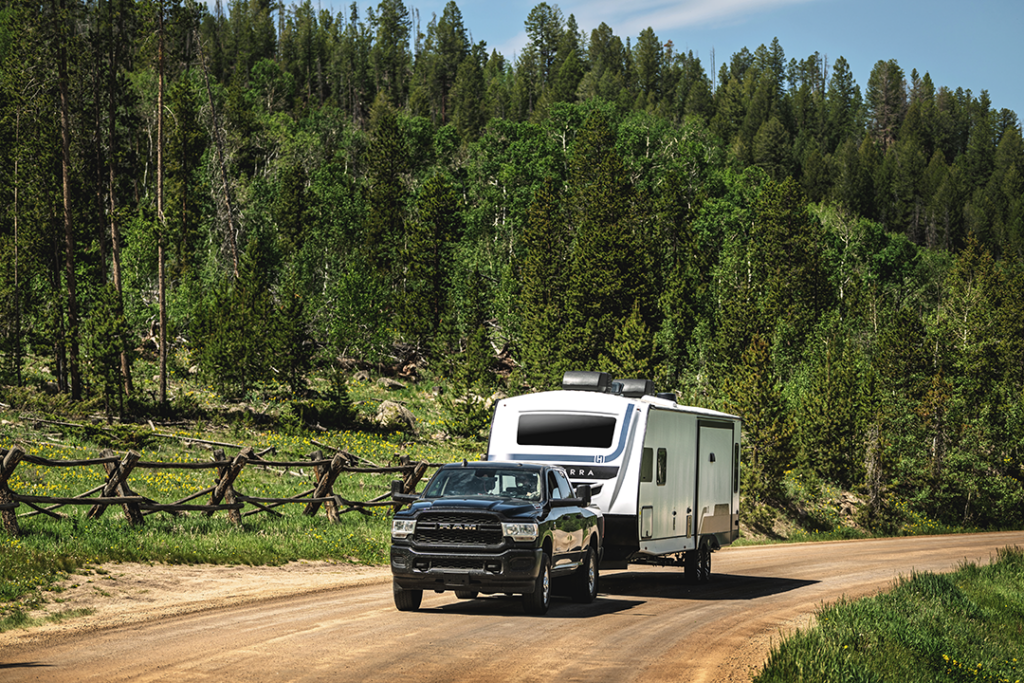
You did it. You bought the camper. You've already pictured the first night in Bella Vista by the creek, the kids roasting marshmallows and that first cup of coffee outside the door. Then it hits you on the drive home from the dealer: you have to tow this thing everywhere.
That nervous feeling is normal, and honestly, it's a good sign. People who respect the trailer tend to tow it well. Nobody is born knowing how to back a camper into a site. Everyone who makes it look easy was a rookie once, usually with an audience. This guide covers what you need to tow safely and the habits that will make you feel comfortable a lot sooner.
Before anything else, make sure your truck or SUV can handle the camper you bought. It's the step new owners skip most often, sometimes because the salesperson said, "Oh, you'll be fine."
You don't need to be an engineer. You just need a few numbers, most of which are on stickers inside the driver's door and on the camper:
One tip: use the camper's loaded weight, not the empty "dry weight" in the brochure. Nobody camps with an empty camper.
If you're not sure your numbers work, a good hitch shop can go through them with you. We'd rather have that conversation before your first trip than after.
A camper needs more than a ball on the back of your truck. A safe setup usually includes:
How all of this is installed and set up matters as much as the parts themselves. A weight distribution hitch that hasn't been adjusted for your vehicle and camper can make towing feel worse, not better.
The best thing a rookie can do is practice where nobody is watching. Find a big, empty parking lot on a weekday, like a church lot or an empty business lot after hours, and spend an hour or two on:
Pick a spotter and agree on hand signals or use your phones before you're in a campground. "Stop" should mean stop, no discussion. Plenty of first trips have been made more stressful by two people with different ideas of what "a little more" means.
Before every drive, walk all the way around the camper and check:
It takes five minutes. Make it a habit and it'll catch the one thing you forgot.
You don't have to make a cross-country trip your first time out. Northwest Arkansas has some great places to break in a new camper, like the Corps of Engineers campgrounds around Beaver Lake or Devil's Den State Park. A short drive lets you learn your setup and find out what you forgot to pack, and you're close enough to home to go back for it.
What size hitch do I need for a camper? Most travel trailers need a Class III or Class IV receiver hitch. Check your camper's loaded weight and tongue weight, then match them to the hitch and your vehicle's ratings.
Do I need a brake controller to tow a camper? If your camper has electric brakes, yes. Most campers do, and a brake controller is required to use them.
Do I need a weight distribution hitch? Most travel trailers tow noticeably better with one, and some vehicle manufacturers require one above certain trailer weights. Check your owner's manual.
Where can I get a camper hitch installed in Northwest Arkansas? Long's Northwest Hitch installs and sets up camper towing equipment, including hitches, weight distribution, sway control, wiring and brake controllers, for new owners in Bentonville, Farmington, Rogers, Springdale, Tontitown, Fayetteville, Gravettem Gentry, Pea Ridge, Bella Vista, Centerton, Lowell, Siloam Springs and surrounding areas.
Every confident camper towing out there started exactly where you are now. Get the right equipment, have it set up for your vehicle and camper, practice a little, and the nerves fade faster than you'd think. Give us a call and we'll help get your first setup ready to tow.